

The most googled retirement question in Australia... answered
And in the newspapers this week: Didn’t retire with ‘enough’? Here’s how to make the most of it

In this edition
Feature: The most googled retirement question in Australia... answered
From Bec’s Desk: The course is kicking off: sold out of workbooks!
The Age and Sydney Morning Herald: Didn’t retire with ‘enough’? Here’s how to make the most of it
Prime Time: How to get a handle on subscription creep

How much super do you actually need to retire?
This is the most Googled retirement question in Australia. And the answer most people get sent to is a number (usually a big one) that leaves them feeling left behind before they’ve even started. So let’s sort this out properly.
The numbers people quote most often
ASFA, the Association of Superannuation Funds of Australia, publishes a quarterly Retirement Standard that most super funds and financial websites point to. Their December 2025 figures say a comfortable retirement costs $54,840 a year for a single person, and $77,375 for a couple. To fund that, they estimate you need $630,000 in super if you’re single, or $730,000 as a couple and a fully paid off home, and access to a part age pension.
Those are the numbers doing the rounds. And for a lot of people, they land like a punch in the stomach. But the headline numbers leave a lot of information out. Let’s explore what they forget to tell you:
The age pension is part of the plan
Those ASFA figures assume you’ll receive a part age pension at 67. That pension is doing a lot of the heavy lifting, and it should be, because it’s designed to. Around 62 per cent of Australians over 67 currently receive some form of it. It’s not a fallback for people who didn’t save enough. It’s a legitimate, designed-in layer of the system, and most people are entitled to at least a part pension.
The full age pension currently pays $31,223 a year for a single person and $47,070 for a couple, including supplements. When you stack that alongside even a modest super drawdown, you’re already in the ballpark of a decent lifestyle. The practical upshot: you don’t need your super to replace your entire income. You need it to work alongside the pension. That’s a very different planning problem and a much more manageable one.
The number that might actually reassure you
Research from Vanguard’s How Australia Retires 2025 report found something worth sitting with: people consistently overestimate how much they’ll spend in retirement. Couples aged 65–74 expected to need around $59,000 a year. Retired couples their age actually reported spending $55,000 on average.
Most people spend less than they expect. Especially in the middle and later years, when the urge to travel and spend big tends to quietly ease off.
What the number actually depends on
There’s no single answer to “how much do I need?” because the question has three moving parts:
What you spend. Not what you think you spend: what you actually spend. Run the real numbers and you’ll often be surprised how manageable it looks.
What your super generates. A balance of $400,000 drawing down at 6 per cent produces $24,000 a year. Add a part age pension and you’re already approaching a liveable income, especially with no mortgage, no kids to support, and super income that’s completely tax-free.
What the age pension adds at 67. Even a part pension makes a meaningful difference to how far your super needs to stretch. And for many Australians, it’s the layer that makes the whole plan work.
When you know those three numbers (your spending, your super projection, and your likely pension entitlement )you have an actual picture of what’s possible. Not uncertain anxiety - a real plan!
The thing most people forget about super income
Once your super moves into the retirement phase, the income it pays you is tax-free. That changes the comparison completely. People who’ve been living on $80,000 or $90,000 a year are often genuinely surprised by how comfortably they live on $55,000-$60,000 in retirement, because the tax that was quietly disappearing from their pay packet every fortnight is suddenly gone.
Don’t rely on a number on a website. Build yourself a picture of how your life actually works.
The Epic Retirement course and/or book walks you through exactly this process building your own retirement picture step by step, so you can move from worry to excitement about your retirement.
Get your copy of my books here: How to Have an Epic Retirement and if you’re not ready for retirement, Prime Time: 27 Lessons for the New Midlife.
Or explore the course here: Epicretirement.net/upcoming-courses

Happy Mother’s Day! I’m looking forward to being pampered today and I hope you’re already enjoying it too.
I’ve been on the road again this week for the fifth week in a row and honestly, I’m a little travel wearied. Sydney first for some podcast recordings, then up to beautiful Cairns to speak at the Financial Counselling Australia National Conference. My topic was: Epic Retirements Are Not Just for the Wealthy. Up to 900 financial counsellors in the room. It’s also the inspiration for this week’s newsletter column.
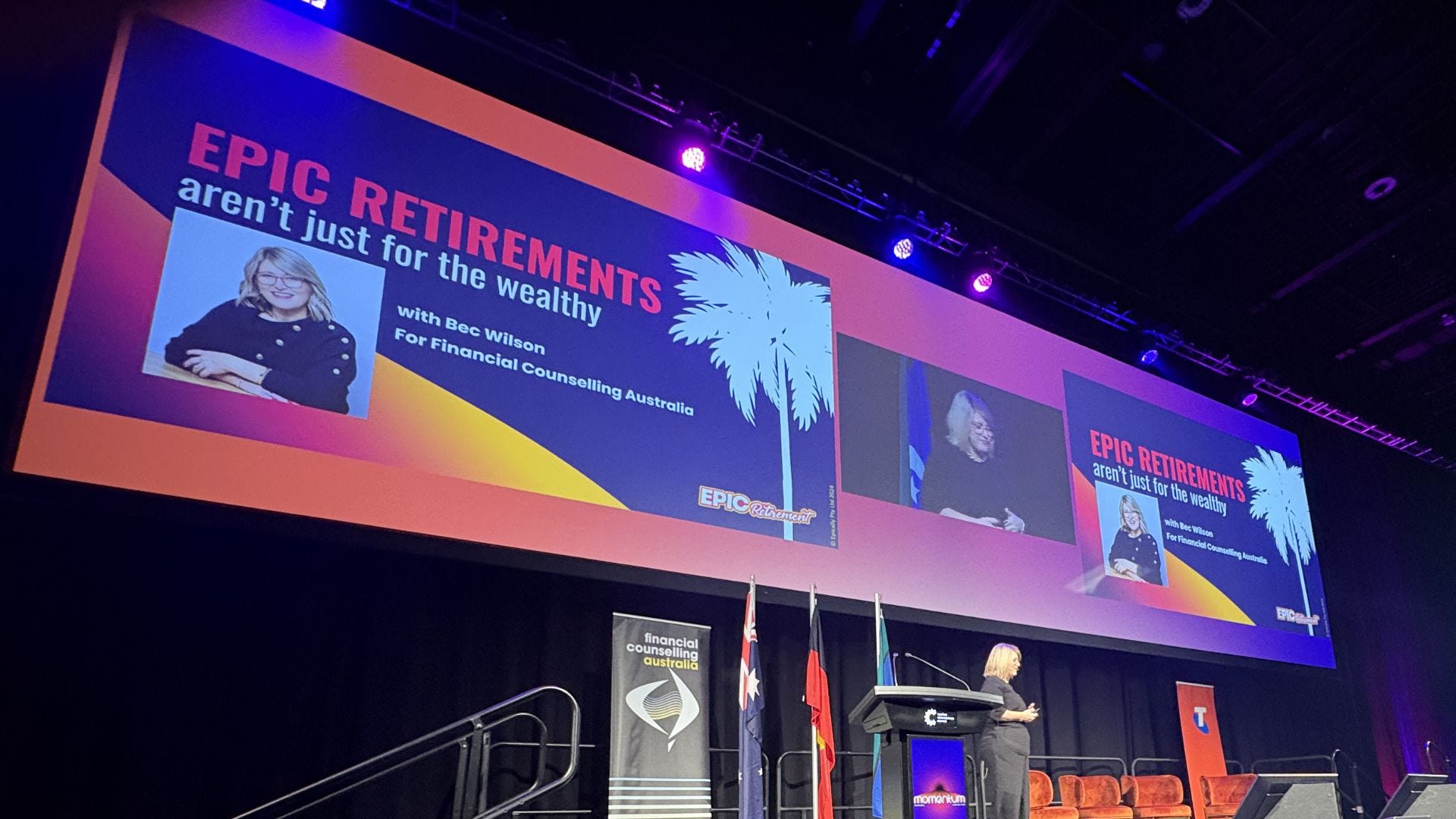
I have to say I came home genuinely moved by the people I met there.Financial counsellors are doing some of the most important, most underrecognised work in this country. They sit with people in real distress: people drowning in debt trying to find a way out, people in frightening and vulnerable situations who need someone to help them navigate through. They build financial literacy with Australians who need it most, and they do it with enormous hearts and quiet dedication.
And one thing that really stayed with me: some wonderful Indigenous educators taking that financial literacy work back to their communities – their mobs – in ways that only they can. Reaching people that no one else could reach, in language and with trust that only comes from within. That’s powerful work.
Most of their clients arrive in despair and there are no quick fixes. So if you know a financial counsellor, give them a cheer, a shout out, or just a quiet thank you. They deserve it.
—
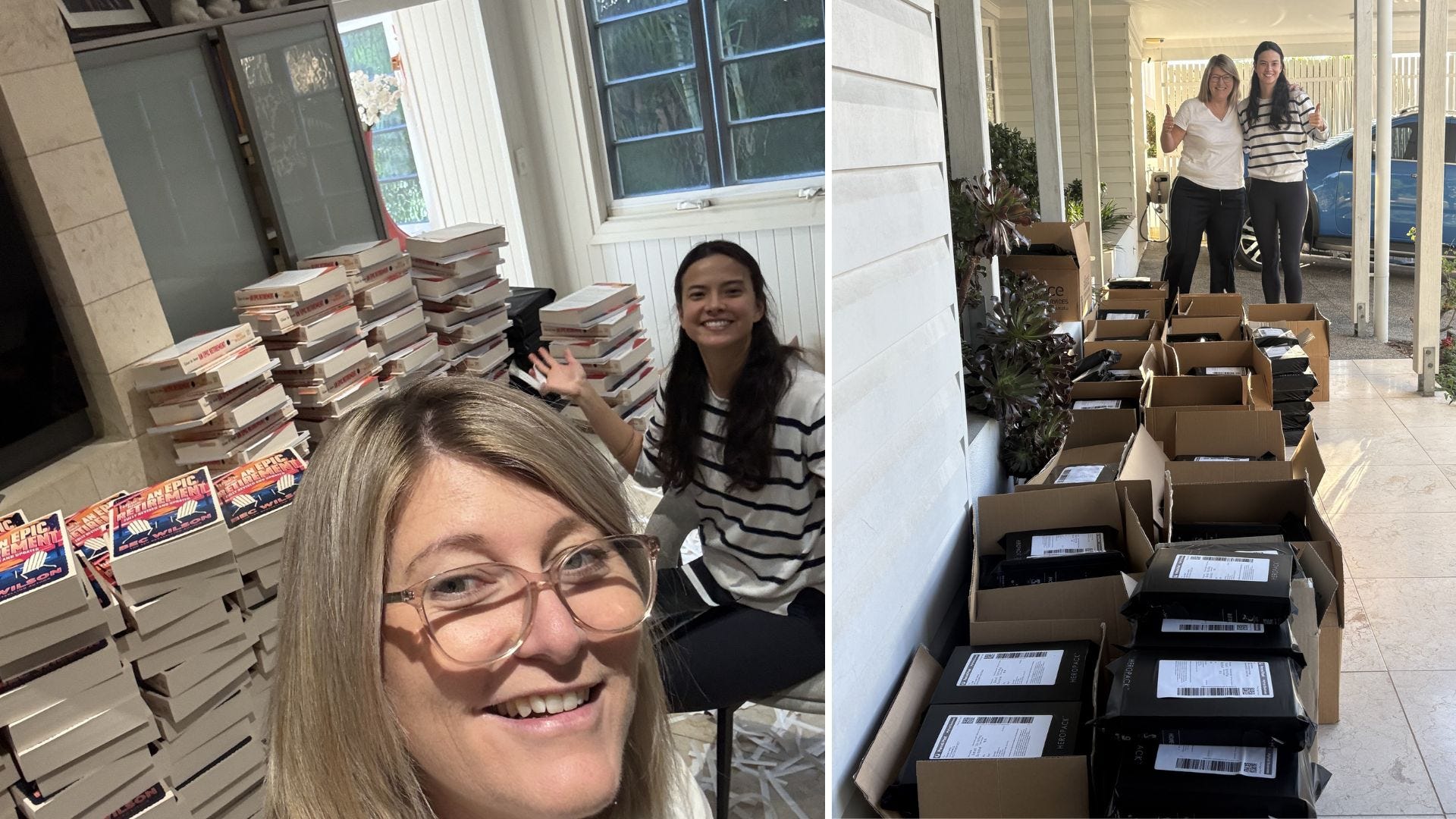
On a less sombre note - friday we packed and sent all the Welcome Packs for the enormous How to Have an Epic Retirement Flagship Course kicking off on Thursday. The Earlybird deal is closed. You blew us away! You can still get some last minute tickets but we’ve completely sold out of printed workbooks until the next program. Sorry about that. This is the biggest flagship course we’ve ever done by 25%. The demand has been AMAZING. You can book here if you’re keen to do the program using the digital workbook (it’s good!) but don’t delay. We’ll give yo 10% off for being a community member 😉. Use the code LATE10 - It’s already applied if you click this link.
Now - back to your Mothers’ Day. Get spoiled! Think about retirement!
Big hugs to everyone who has lost their mum today too! Thinking of you! 🥰
Cheers - Bec Xx

Author, podcast host, columnist, retirement educator, and guest speaker

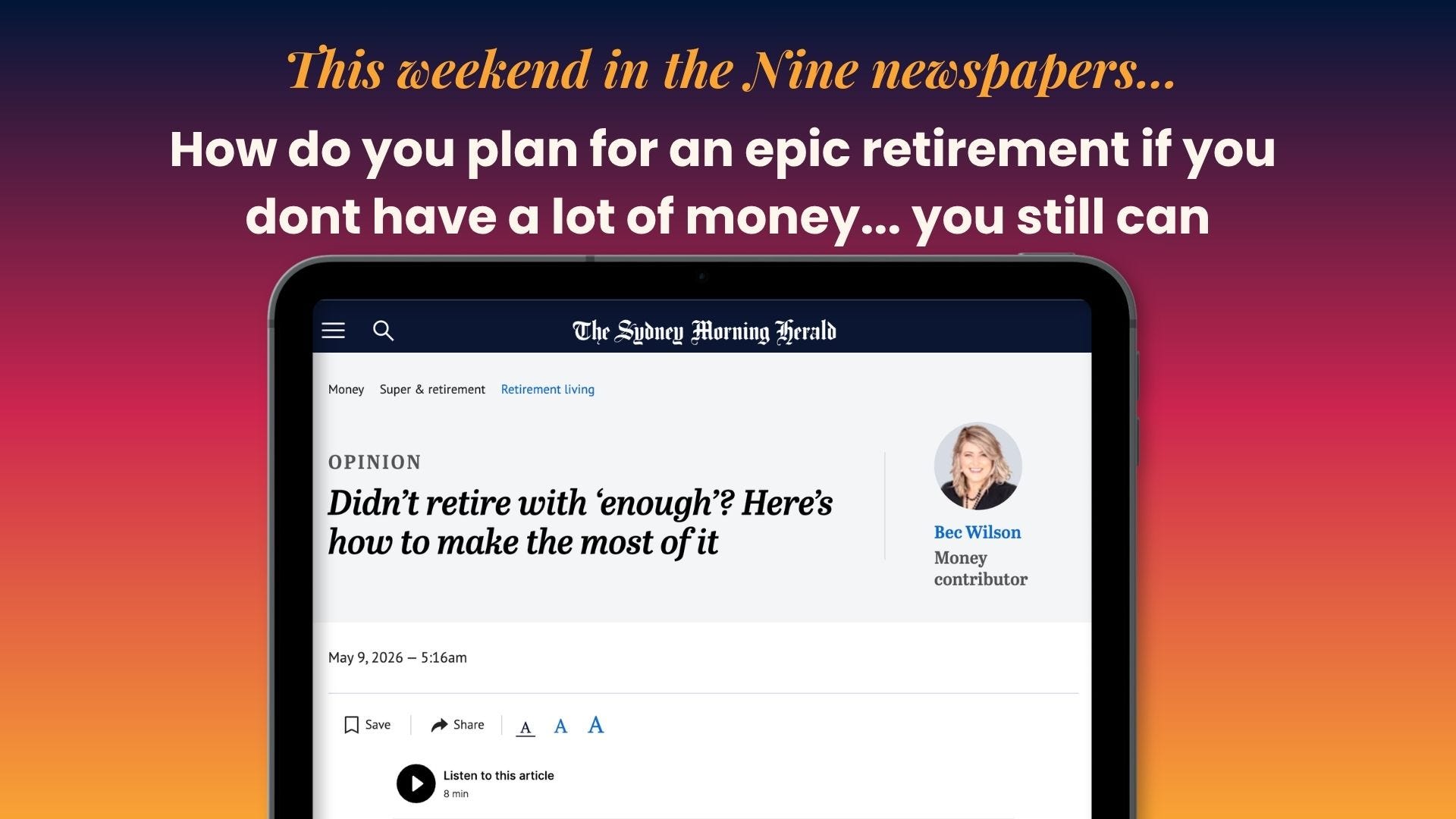
Didn’t retire with ‘enough’? Here’s how to make the most of it
I spent the latter half of this week at the Financial Counselling Australia conference, and it really brought something into focus for me. Many Australians aren’t retiring in comfort.
We don’t talk nearly enough about what retirement looks like – or how to plan for it – if you don’t have a lot of money. We also don’t rave about financial counsellors enough and how they help people in tough situations, or who are deep in debt, to get back on track.
We tend to talk about retirement as if it’s something people move into by choice, confidently and with excitement. You’re expected to build up your super, pay off your home and step away from work with a fair bit of control over what comes next.
But that’s not how it’s playing out for everyone right now. In fact, close to half of Australians retiring today rely on the age pension for a significant part of their income, and only a third or so retire by choice.
So what does retirement planning look like for people who don’t have “enough”, who didn’t get the chance to plan or who step away from work because their health shifts or caring responsibilities take over?
In that world, it’s not about optimising your retirement and choosing the date. It’s about learning to live with choices that may have been forced upon you and making the best of the opportunities you do have.
Rebuilding your financial confidence is the first step, and the best way to do that is to understand how the financial systems that support retirement work, and how much money you can rely on coming in from passive income sources such as the age pension or superannuation.
This article continues. It was published in The Age and The Sydney Morning Herald on Saturday 9th May 2026. Read the whole article here. Note - it has a sign-up gate but no paywall.

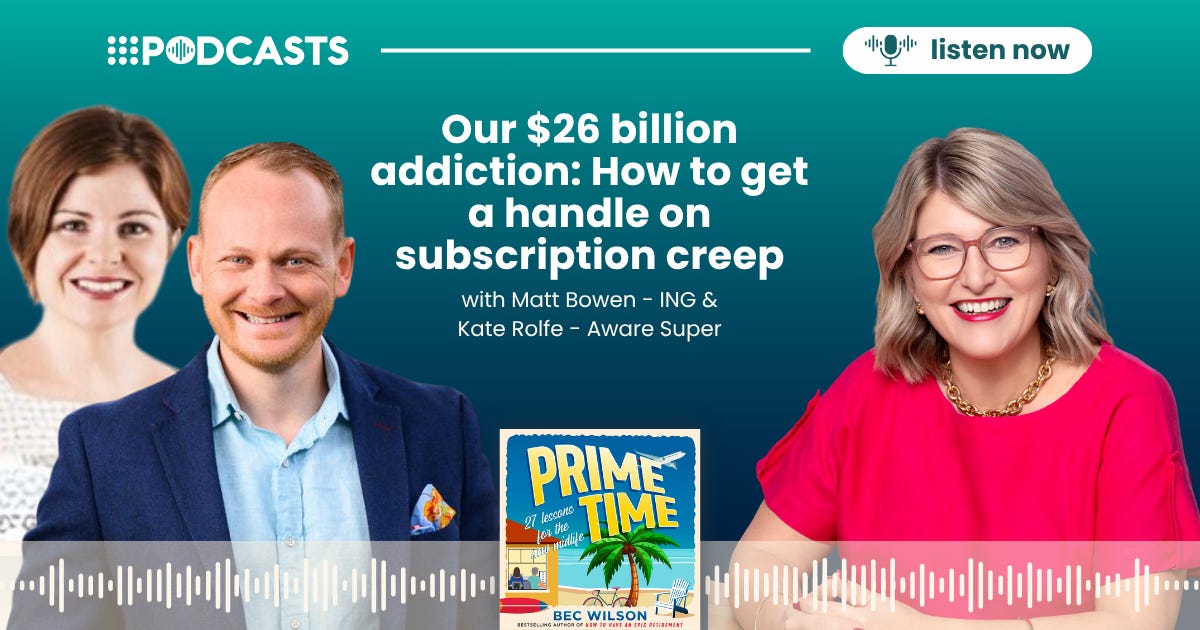
Today’s episode is about something many of us don’t realise is happening until we stop and really look at our bank account… subscription creep.
All those streaming services, apps, software subscriptions, food boxes, memberships and cloud storage plans that quietly pile up over time. In fact, ING’s latest research found Australians are now spending a staggering $26.5 billion a year on subscriptions - and the number keeps growing.
Because most of these services are only “a few dollars a month”, they often fly under the radar, even as they slowly start taking a bigger bite out of the household budget.
So in this episode, I sit down with Matt Bowen, Head of Consumer and Market Insights at ING Australia, to talk about the huge price tag of Australia’s subscription addiction, why these business models are so effective, and the practical things we can do to get the costs back under control.
We also tackle another financial task many people avoid entirely: opening their super statement. Kate Rolfe from Aware Super joins me to explain the three key numbers everyone should be checking, why fees matter more than people realise, and the important detail too many people leave blank.
LISTEN TO THIS EPISODE OF THE PODCAST HERE: