

Not quite retiring - it's a thing
And in this weekend's newspapers: 'The super shake-up that could change how you spend in retirement'

In this edition
Feature: Not quite retiring - it’s a thing
From Bec’s Desk: Bushwalks and awards
The Age and Sydney Morning Herald: The super shake-up that could change how you spend in retirement
Prime Time: The top-to-bottom mid-life health audit

Not quite retiring - it’s a thing
A friend of mine handed in his notice this week, three months until what he’s calling his “second retirement.” He turns 60 next year, and when he talks about it, he’s genuinely convinced this is it.
So I got him talking. And for the first ten minutes, it was all about time. How he has none of it right now. How he’s craving it in a way that feels almost physical. How he came back to the workforce after retirement number one feeling ready, energised even, and how somewhere in the past year that feeling quietly drained away and left him with a diary full of other people’s priorities and almost none of his own.
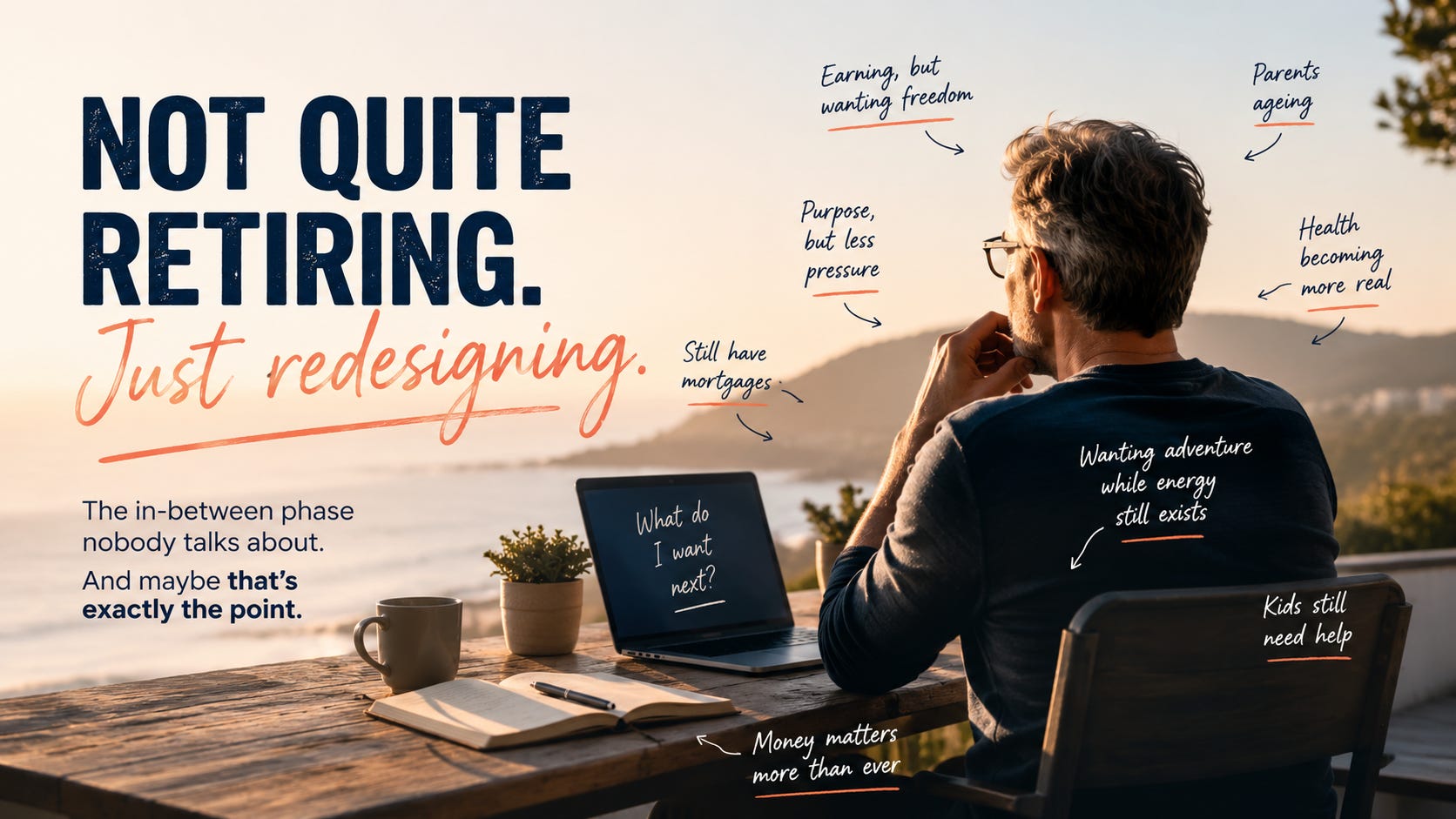
But then something shifted. As the conversation went on and I kept asking questions, his tone changed. Because when I asked him what he might actually do next, he didn’t dismiss work entirely. He paused. He knows his knowledge is valuable. He likes being useful, genuinely likes it, and he’s self-aware enough to know that the feeling of usefulness doesn’t automatically follow you into retirement just because you want it to. He’s watched it disappear once before, and he hasn’t forgotten what that felt like.
So what he actually wants isn’t quite retirement. It’s time. Space in his life. Room to think, to breathe, to decide what the next chapter looks like without the current one consuming every available hour. The problem is that in the role he’s in right now, there is no version of that on offer. So the only move he can see is to leave completely and create the vacancy himself.
I thought that was one of the more honest things I’d heard someone say about this stage of life in a while. Because I think a lot of people in their late 50s are carrying exactly that tension, not wanting to stop contributing, but not willing to keep going the way they have been. Wanting the usefulness without the exhaustion. Wanting to feel like their experience still matters, just in a different configuration, on their own terms, with some of their own time back.
It’s harder to navigate than a clean retirement, because there’s no obvious template for it. But if you’re sitting somewhere in that territory, here are the questions worth actually working through.
Is it the work itself, or the terms you’re doing it on?
This one matters more than most people realise, because the answer changes everything. A lot of people who think they want to stop working actually want to stop doing so very much of it, under these conditions, with this much pressure and this little control over their own time. That’s a different problem with different solutions. The question is whether those solutions are available to you where you are right now, or whether, like my friend, the only realistic path to the life you want runs through leaving first.
What would you actually do with the time, specifically?
Most people haven’t thought this through beyond a vague sense of relief, and the first few months of stepping back tend to feel wonderful regardless. After that, a lot of people find the days harder to fill than they expected, particularly if work has been the main source of structure, identity, and connection for the last few decades. It’s worth asking yourself honestly what a genuinely good week looks like when you’re not working full-time, and whether you have enough of the right things already in your life to fill that space well.
What would usefulness look like, redesigned?
This is really the question underneath everything else. If you know, like my friend does, that pure retirement didn’t fully work last time, then the goal isn’t to stop contributing. It’s to find a version of contributing that doesn’t cost you everything else. Consulting, a board position, mentoring, building something smaller on your own terms. These are real options worth thinking through properly, not filing away as vague possibilities to sort out later.
Have you actually modelled what stepping back costs you financially?
Not in the general sense of whether you have enough saved, but properly stress-tested. What does reducing your income cost you per year, and what does that do to your long-term position? A lot of people are more financially ready to make a move than they think, and some are less ready than they assume. Getting proper advice from someone who understands this phase of life is worth doing before anything is decided.
And have you had the real conversation with your partner?
Not just about the money, but about what the day-to-day actually looks like when one or both of you is renegotiating how you spend your time and maybe the other one is already retired. Talk about what you each need from the next chapter, and what it means for how you live together day to day. It’s one of those conversations that’s easy to keep putting off and genuinely important to have before anything is locked in.
My friend might be doing exactly the right thing. Sometimes the only way to get your time back is to clear the diary completely and start again. But the vacancy only works if you go into it with some sense of what you’re hoping will show up.
Get your copy of my books here: How to Have an Epic Retirement and if you’re not ready for retirement, Prime Time: 27 Lessons for the New Midlife.
Or explore the course here: Epicretirement.net/upcoming-courses

I’m writing this on Saturday afternoon after a day out hiking and enjoying nature in Mt Glorious. I don’t do enough of this stuff - pleasant bushwalks through countrysides within an hour from home. But this winter I’m promising myself more of it. It’s all part of my midlife health audit - which you can listen to more of on my podcast.
I’m also on the hunt for a destination multi-day hike, something enjoyable but not too punishing, to give myself a proper project to work towards. Having done the Three Capes in Tasmania in late 2024, I think it’s time to be proactive again. If you have any good suggestions for a winter or spring walk, hit reply and tell me about it. I’d love to hear what you’ve done and what you’d recommend.
Now, onto the work stuff!
This week we ran our first live event for the How to Have an Epic Retirement Flagship Course, and it’s been our biggest cohort ever, so we’ve been well and truly on our toes. We welcomed Ashton Jones, Retirement Expert and Director of Innovation at MLC, to talk about longevity, and it was the most question-packed session we’ve ever had. The curiosity in this group is something else.
In Week 2, everyone is getting into the Age Pension and building their retirement budget, and on Monday evening we have Andrew Lowe from Challenger joining us for our live session on Safe Spending. It’s shaping up to be another good one.
If you missed this round and want to be the first to know when the next course opens, you can add your name to the expression of interest list here. The next intake kicks off on 13 August.
We’re also launching our pilot program in the UK this week, which is genuinely exciting.
And I’m off to Sydney for the Chant West Superannuation Fund of the Year Awards, an industry night celebrating the super funds and the teams behind them. I have the privilege of presenting one of the awards this year, and I always love seeing who takes out Retirement Fund of the Year. I’ll report back next week!
Now - go enjoy your Sunday - but before you do, read my article in The Sydney Morning Herald. It’s on a topic I have resisted writing about despite many PR people trying to convince me to over the last couple of years. But the market and the products weren’t ready for consumers to buy them and advisers have been slow to engage with them (as I explain). That all changed this week Innovative ‘Lifetime Income Streams’ are going to be a much bigger part of the conversation from now on - and something you need to be aware of and contemplate whether you want to advocate for them being included in your mix. I explain them in my column in detail in a way I hope everyone can grasp.
Make it epic!
Cheers - Bec Xx

Author, podcast host, columnist, retirement educator, and guest speaker

The super shake-up that could change how you spend in retirement
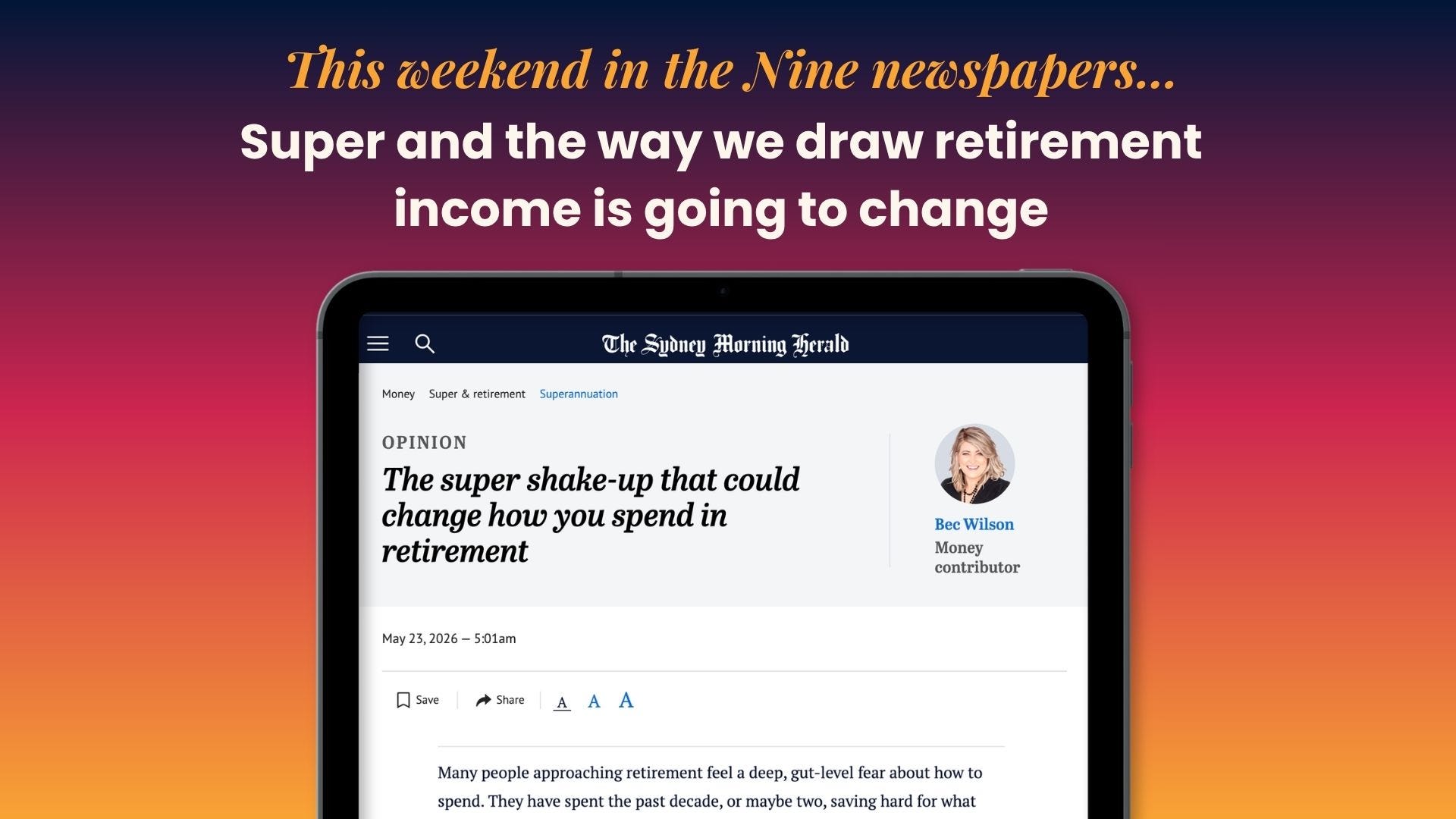
Many people approaching retirement feel a deep, gut-level fear about how to spend. They have spent the past decade, or maybe two, saving hard for what could be a 30-year retirement, and most have no real idea how their money will work once they get there.
Financial advice, the only industry legally able to help with that fear, has spent years rewriting its business models around managing investments for an ongoing annual fee, making it expensive and largely the domain of the wealthy.
Super funds have been left to solve the problem for everyone else, and they have been loudly encouraged by the government to step up with a combination of digital advice and lifetime income products.
This week, two announcements signal that everyday people should start getting excited about doing retirement income differently.
This article continues. It was published in The Age and The Sydney Morning Herald on Saturday 24th May 2026. Read the whole article here. Note - it has a sign-up gate but no paywall.

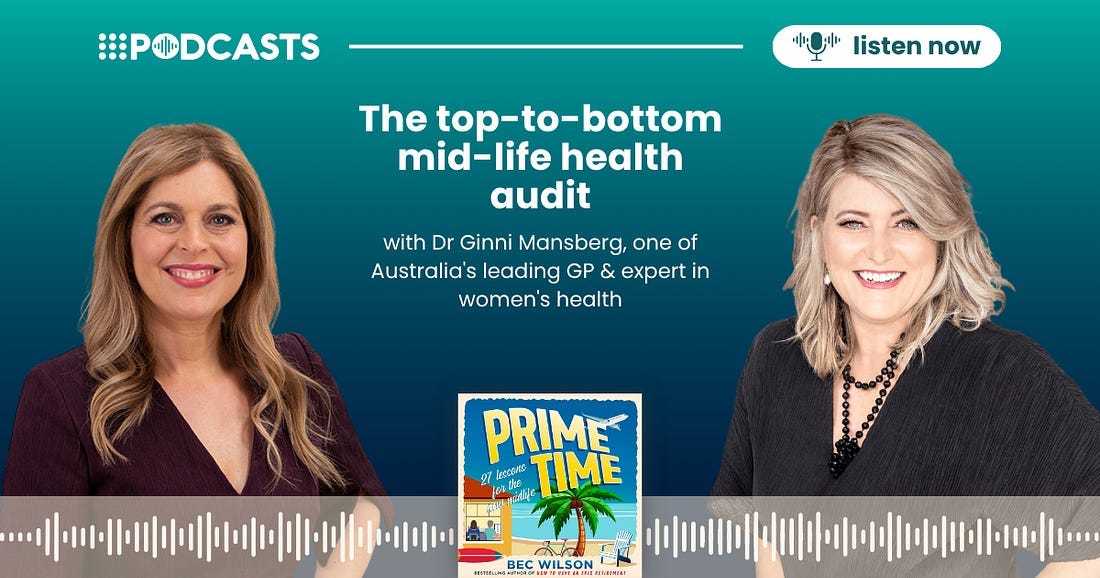
The top-to-bottom mid-life health audit
Today, I’m getting personal. Turning 50 this year has been a real wake-up call for me when it comes to my health. Not in a dramatic way, but in a very honest, “I need to start thinking differently about the next few decades” kind of way.
Because the reality is, midlife is when many of the things that weren’t really on our radar in our 30s and 40s start to show up. - in my bone health, blood pressure, muscle loss, menopause, dementia risk, balance, hearing and eye health. Even the way we think about longevity starts to shift.
So, in this episode, I wanted to take a really practical, top-to-bottom look at what we should actually be paying attention to at this stage of life and what we can still do now to dramatically improve the decades ahead.
I sit down with renowned GP Dr Ginni Mansberg to talk through the midlife health changes we should all be preparing for, the preventative tests that matter most, and why the “unsexy stuff” like sleep, movement, muscle and social connection turns out to be the stuff that really works.
Then later in the episode, I also chat with Lenette Gear from Australian Unity about health insurance - how our cover needs change as we get older, what people often misunderstand about private health, and how to think about the role it plays in supporting us through the next phase of life.
LISTEN TO THIS EPISODE OF THE PODCAST HERE:
Bec, that's the first article I've read that describes exactly what I'm doing - not quite retiring. I've been consulting part time the last 2 months and enjoying it immensely. The challenge is keeping the balance- especially at 60. As most roles either want you full time or, frankly, not at all.
I get where your friend is coming from. At 65 I approached my manager about dropping back to 3 days a week. His response, my skills are too valuable and he doesn’t see how the work gets done.
I too am happy to be contributing but need it to take less of me (my commute is also a problem at 3+ hours a day).
The end result is I will leave and work somewhere else on a part time basis for the next 3 or so years, health allowing.